

My antibiotic experiment paid off brilliantly: from Herx to Happiness
So here we are about a month later, and I am feeling fantastic: no sinus congestion whatsoever, no chronic mucus production, with more energy and clear focus.
Recent mentions of this theme:
As I mentioned at the end of March 2026, I had been having bouts of “allergic sinusitis” which I am 100% sure were allergic in part, but which I also became convinced had a microbial-dysbiotic component.
When we were traveling, the sinus congestion worsened into a very mild bronchitis, and at that point I decided to start low-dose antibiotic therapy with azithromycin, which I had taken in 2011 (also for sinus congestion) with good results: 24 hours of slight worsening followed by years of relief.
Many people—perhaps most of the population, at least occasionally—carry the bacterium Chlamydophila pneumoniae somewhere in their body, with the most problematic areas being sinus-respiratory tract, vascular endothelium (inner lining of blood vessels), and brain.
Chronic carriage of Chlamydophila pneumoniae associates directly with sinusitis, lung diseases, cardiovascular disease, and Alzheimer-type dementia.
The usual starting dose with azithromycin is 500mg, so in order to avoid a Herxheimer “die-off” reaction, I started with 250mg but even this was too much—I spent the next 36 hours coughing uncontrollably and felt like I had been on the losing end of a mixed martial arts fight for the next several days. This Herxheimer “die-off” reaction also provided very clear proof that I was on the right track and that more antibiotic would be necessary to reduced (probably not eliminate) the microbial load, which I reasonably presume was being headlined by Chlamydophila pneumoniae, which I had carried before and described in Inflammation Mastery 4th Edition—page 919.
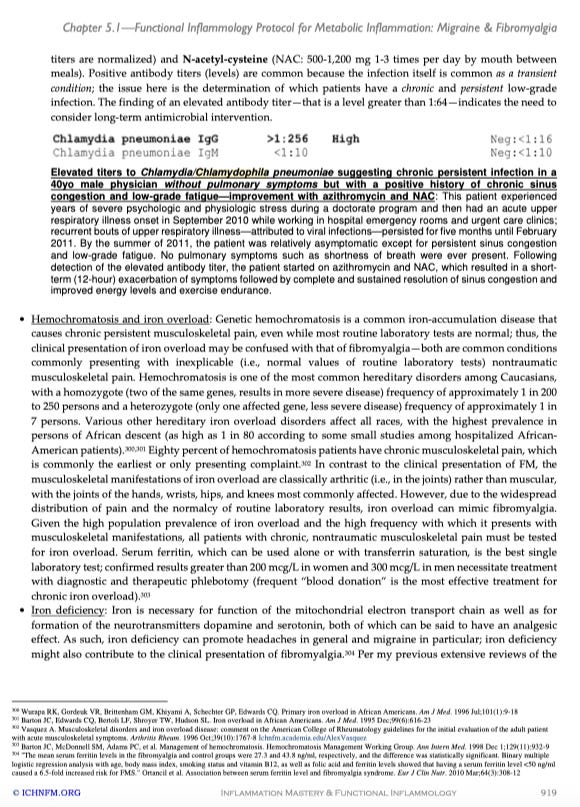
As noted in my book Inflammation Mastery 4th Edition, some people (including me) are chronic carriers of the intracellular bacterium Chlamydia/Chlamydophila pneumoniae. As such, I was forced to contend with this obvious clinical diagnosis. I had briefly described my previous personal case on page 919 of Inflammation Mastery 4th Edition.
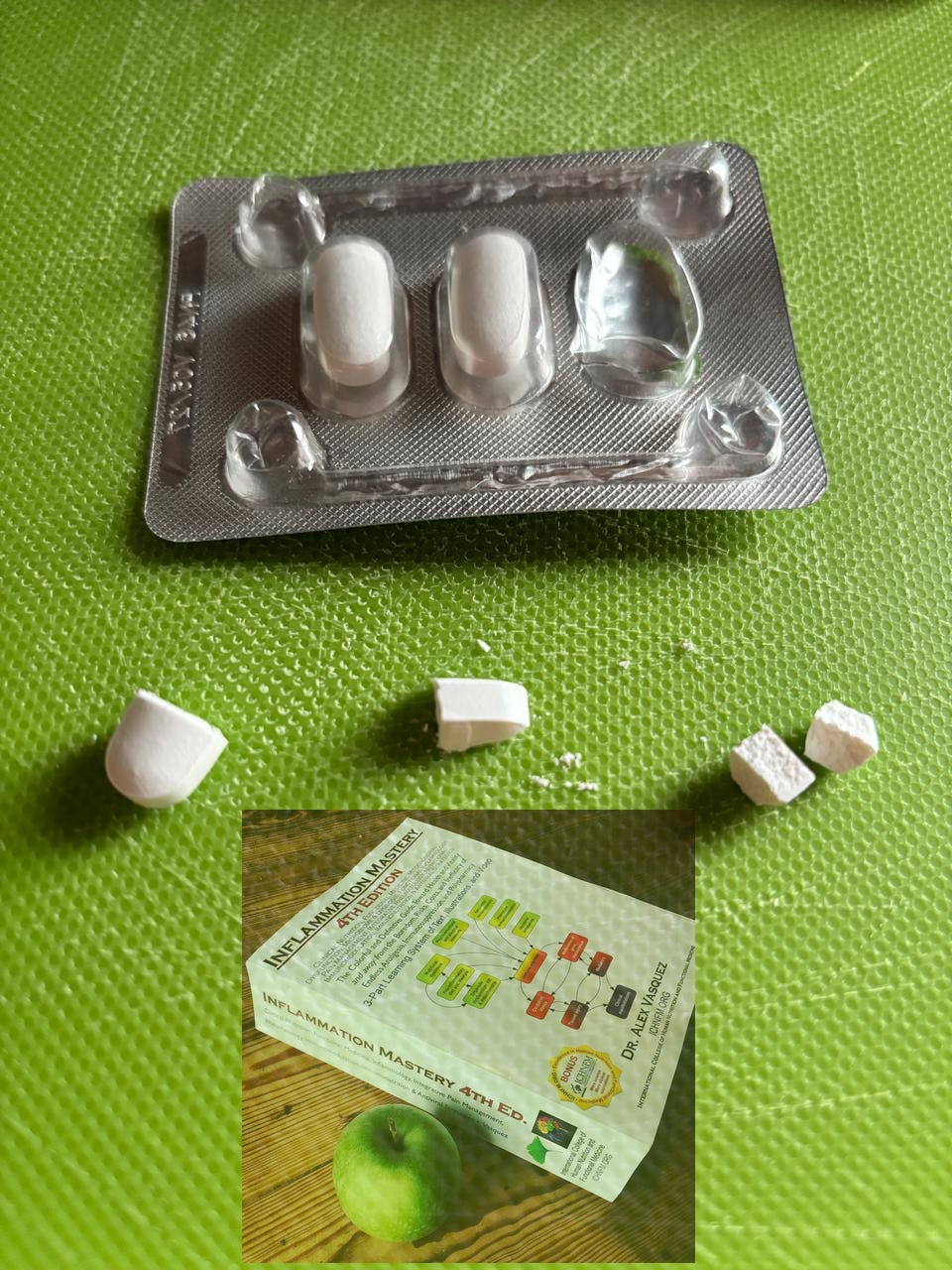
So when I restarted the azithromycin, I cut the 500mg in half for 250mg, then in half again for 125mg, then in half again for 62.5mg, which I tolerated very well. After taking 62.5mg, I waited about two days and took another 62.5mg, then waited another day or two and then took 125mg and then eventually resumed 250mg every other day for about a week. Azithromycin is a unique antibiotic that has a very long tissue duration measured by several days, and this allows for flexible dosing, typically 3 days for acute/superficial infections and up to 6 weeks for more chronic infections.
So here we are about a month later, and I am feeling fantastic: no sinus congestion whatsoever, no chronic mucus production, and—at least relative to the past few weeks—more energy and very clear mental focus.
A few lessons learned, relearned, reinforced and clarified:
Legitimate seasonal/environmental sinus/respiratory allergy can overlap with sinus/respiratory dysbiosis, and the latter will amplify the former because the local and systemic inflammatory pathways are already activated.
A disproportionate inflammatory reaction (noted by fatigue, coughing, mild fever, etc) immediately following antibiotic administration is quite likely a Herxheimer-type “die-off” reaction; as such, this confirms the diagnosis of microbial colonization, dysbiosis, or infection.
A good strategy is starting “low and slow” with antibiotics in order to prevent/minimize adverse effects including Herxheimer-type “die-off” reaction
All drugs—including antibiotics—carry risks of predictable and unpredictable adverse effects which have to be considered before concluding that the worsening is due to a Herxheimer-type “die-off” reaction; the differential diagnosis (DDX) list includes:
Drug allergy
Drug-induced lupus
Interstitial nephritis, acute kidney injury
Antibiotic-triggered diarrhea or superinfection with Clostridioides difficile (also known as Clostridium difficile, C. difficile or C. diff)
Steven-Johnson syndrome, Toxic epidermal necrolysis
Azithromycin is also notorious for causing heart rhythm abnormalities (QT prolongation) leading to sudden cardiac death, typically within the first 5 days of antibiotic treatment; this is another reason to START SLOW AND LOW. Also, Azithromycin should be used with adequate intakes of potassium and magnesium to reduce the risks of QT prolongation and sudden cardiac death.
Herxheimer-type “die-off” reaction

Thank you for supporting this archive of information for the cost of a coffee while I am working—about $4.20—for the hours, days, months and years developing this archive which now contains more than 1,000 pages and hundreds of hours of videos …
….on a wide range of topics including Clinical Nutrition (including the Vitamin D series of Videos and Scientific Publications), Antiviral Strategies, Microbiome+Dysbiosis (CME series of >12 videos), Functional Medicine (conference videos) and Pharmacology (of Vitamin B12 and Pediatric Injections,.. Leadership, Critical Analysis of Research and Social Events, architecture, music (Celibidache), philosophy, and a few tutorial videos on fun topics like how to select a good wine/whiskey (and minimize the risks)! HealthyThinking.substack.com includes a wide range of topics including music, politics, architecture, logic, philosophy, recipes (ie, “everything”) plus “Health Homework” (series) to inform and remind you about important health-promoting actions…whereasInflammationMastery.substack.com attempts to be more/strictly clinical and specific to book updates, clinical research and protocols.
Thank you for the (occasional) cup of coffee to keep me working on new updates!
The original “Part1” post is included below for convenience

If you look at most standard medical articles on Herxheimer Reactions, you’ll notice that hardly any mention is given to the prevention of those reactions, as if the physician gets to sit back comfortably and watch the show while the patient agonizes somewhere along the largely unpredictable range of reactions from mild malaise to severe sepsis.
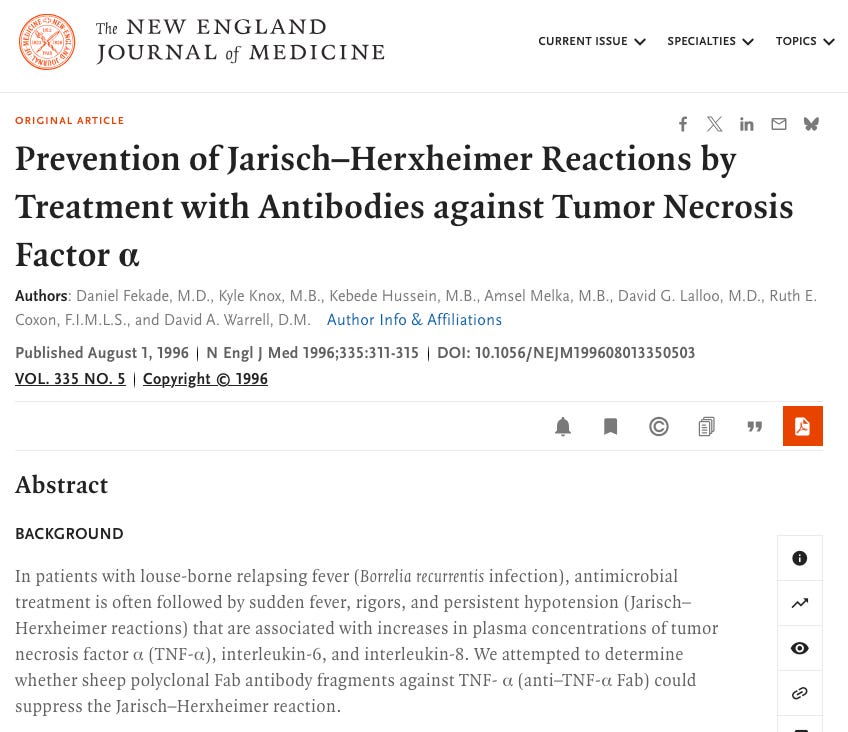
When cursory mention is made of prevention, generally the only treatments mentioned are anti-inflammatory steroids such as prednisolone (cheap, easy, effective) and the injectable antiTNF antibodies (expensive, cumbersome, effective). Indeed, the 1996 publication by Fekade in New England Journal of Medicine was valuable for showing that 1) these reactions could be mitigated instead of just ignored, and 2) antiTNF antibodies were particularly effective: Fekade et al. Prevention of Jarisch-Herxheimer reactions by treatment with antibodies against tumor necrosis factor alpha. N Engl J Med 1996 Aug 1;335(5):311-5
Ok, great—by then, medicine had acknowledged two drugs could be used to mitigate the “healing crisis” of effective antibiotic treatment for chronic infections.
What other drugs could we use?
The answer to that question depends on:
what exact reactions we are trying to prevent,
the particular infection being treated,
the profile of the patient including any recent/past reactions, general status and comorbidities,
how far do we want to take this, how creative can we be?
Now that “Herxheimer reaction” is thrown around loosely, we have to at least define what the term means
The discovery and description of the “Jarisch-Herxheimer reaction” originated in 1895 when the Austrian dermatologist Adolf Jarisch noted worsening of syphilitic skin lesions in patients treated with mercury, which was one of the only antimicrobial treatments available at that time; the antibiotic penicillin would not be discovered for another 33 years in 1928 by the British microbiologist Alexander Fleming in London. In 1902, German dermatologist Karl Herxheimer reiterated the findings of Jarish, and the “healing crisis” triggered by antimicrobial therapy (at that time: mercury, arsphenamin, or bismuth) against syphilis gained recognition as the Jarisch-Herxheimer reaction. Slowly but eventually, the eponym was applied to all such reactions to the treatment of spirochete infections (ie, Leptospira, Borrelia, and Treponema), then to other bacterial infections, then to other microbes, then much more informally to anything remotely similar, including so-called “die-off reactions” to intestinal yeast. The problem with the inappropriate use of this specific term to such a wide range of possible reactions is obvious—sloppy use of terminology leads to sloppy thinking and then to sloppy management of patients. “Jarisch-Herxheimer reaction” should be reserved for legitimate clinically-serious infections with spirochetes, possibly extending to other major bacterial infections and colonizations; the more casual “Herxheimer reaction” can be reasonably applied as a shorthand communication of the expected reaction seen in other non-spirochete microbial eradications. I personally don’t think that “Herxheimer reaction” should be applied loosely to the treatment of intestinal dysbiosis because any such reactions should be avoided if the clinician implements correct therapies to avoid intestinal stasis and constipation that are necessary for the production of such reactions—in other words, a “Herx reaction” to something so mild as “intestinal yeast” indicates that the clinician failed to prevent the obvious.
I have been teaching and publishing on the topic of dysbiosis for 25+ years
Back in 2001 when I started teaching Rheumatology at Bastyr University, we as professors and clinicians were still starting to understand the concepts of dysbiosis, which were only starting to be modernized in the late 1990s by pioneers such as Leo Galland MD and Martin Lee PhD. I recall lecturing for post-graduate (CME) seminars in the early 2000s and having to justify the existence of dysbiosis—the term was still foreign and suspect to most clinicians—before I could then talk about treatment strategies. In 2006, I published major reviews on this topic in my textbook Integrative Rheumatology (now Inflammation Mastery 4th Edition) and the chiropractic journal Nutritional Perspectives:
Vasquez A. Nutritional and Botanical Treatments Against “Silent Infections” and Gastrointestinal Dysbiosis, Commonly Overlooked Causes of Neuromusculoskeletal Inflammation and Chronic Health Problems. Nutritional Perspectives 2006 Jan

Those major reviews would of course be followed by additional publications and complete programs on human microbiome and dysbiosis in clinical disease:
Vasquez A. Correspondence regarding Cutshall, Bergstrom, Kalish's "Evaluation of a functional medicine approach to treating fatigue, stress, and digestive issues in women" in Complement Ther Clin Pract 2016 May. Complement Ther Clin Pract. 2018 May;31:332-333. doi: 10.1016/j.ctcp.2016.10.001. Epub 2016 Oct 19. PMID: 27814977.
Vasquez A. Reply to "role of Western diet in inflammatory autoimmune diseases" by Manzel et al. In current allergy and asthma reports (volume 14, issue 1, January 2014). Curr Allergy Asthma Rep. 2014 Aug;14(8):454. doi: 10.1007/s11882-014-0454-4. PMID: 24947682
Vasquez A. Biological plausibility of the gut-brain axis in autism. Ann N Y Acad Sci. 2017 Nov;1408(1):5-6. doi: 10.1111/nyas.13516. Epub 2017 Nov 1. PMID: 29090837
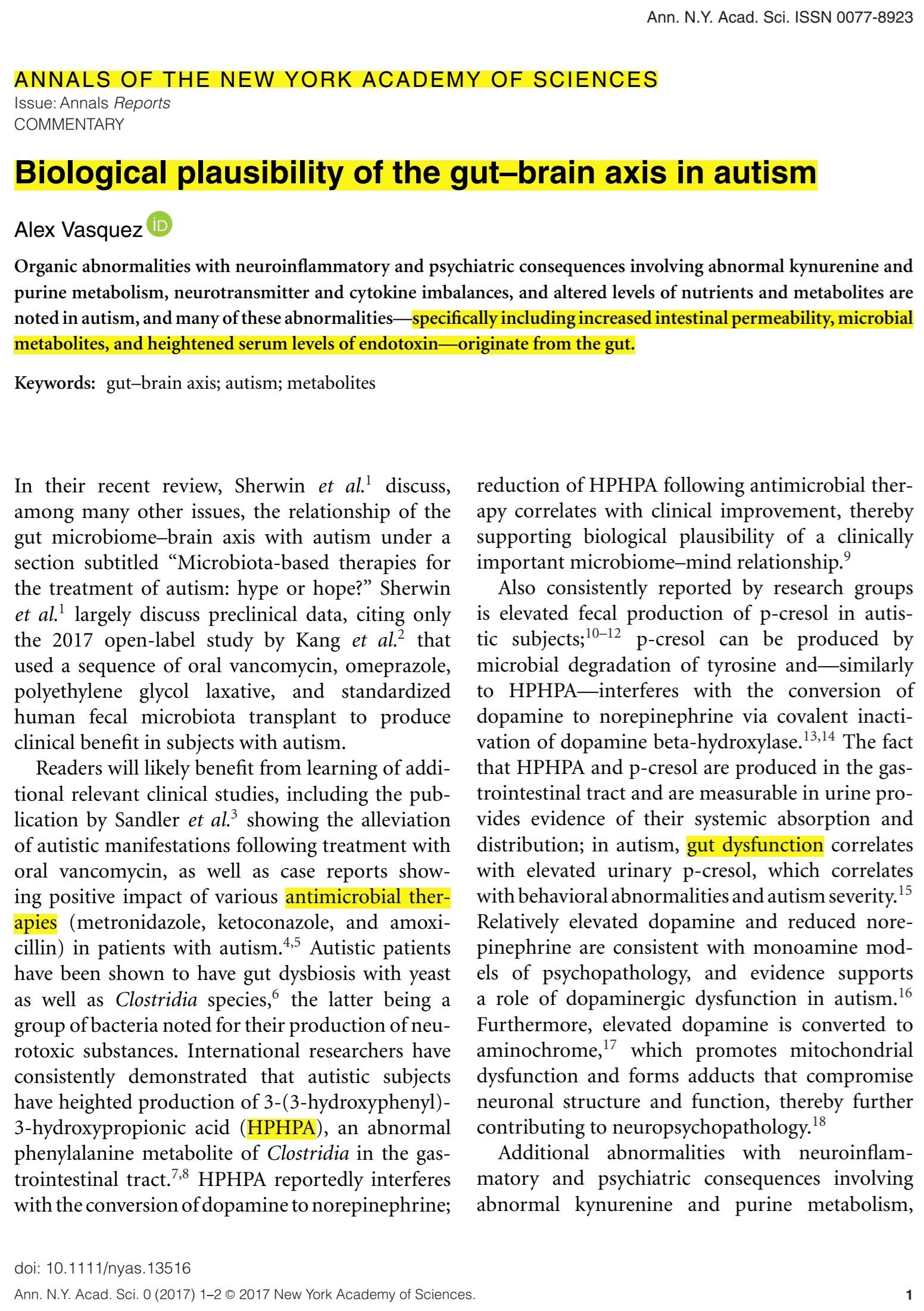
As an expert on this topic, I have had to safeguard it against abuse and exploitation, such as by authors publishing bogus “research” as self-promotional advertisements; during the same timeframe that I was occasionally serving as a reviewer for the journal PLOSone, I published a critique of their bogus publication “Microbiome restoration diet improves digestion, cognition and physical and emotional wellbeing” that lead to its retraction: Retraction: Microbiome restoration diet improves digestion, cognition and physical and emotional wellbeing. March 20, 2018 https://doi.org/10.1371/journal.pone.0194851
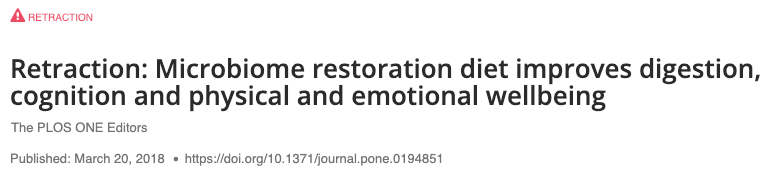
I published my critique separately, available in the attached PDF:
My course on “Human Microbiome and Dysbiosis in Clinical Disease” was developed over several years starting formally in 2015-2017 as a continuing medical education (CME) postgraduate online conference joint-accredited for doctors, nurses, and pharmacists:
Microbiome Dysbiosis (1) Course Overview and Introduction to Major Concepts and Mechanisms
Microbiome Dysbiosis (2) Physiologic and Pathologic Mechanisms of Dysbiosis and Subclinical Microbial Colonizations (VIDEO:1hour,15minutes)
Microbiome Dysbiosis (3) Prototypes of Dysbiosis-Induced Disease(VIDEO:1hour,42minutes=102minutes)
Microbiome Dysbiosis (4) Conceptual Expansion Exploring Clinical Testing, Microbial Relevance and Irrelevance [VIDEO:1hour,18minutes=78minutes]
Microbiome Dysbiosis (5) Microbial Consequences in the Mouth, Oral Cavity[VIDEO:1hour,44minutes=104minutes]
Microbiome Dysbiosis (6) Microbial Imbalances in the Respiratory Tract and Sinuses [VIDEO:1hour,35minutes=95minutes]
Microbiome Dysbiosis (7) Dysbiosis by Location—Genitourinary Tract
Microbiome Dysbiosis (8) Dysbiosis by Location—Blood, Tissue, Parenchymal Dysbioses
Microbiome Dysbiosis (9) Dysbiosis by Location—Skin and Environmental Dysbiosis
My intensive study of Dysbiosis and the related concepts in Physiology and Immunology started in 1995 when I first became ill with gastrointestinal dysbiosis in my last year of chiropractic college—I was not simply studying these topics as an abstract interest but in an honest daily attempt to restore and preserve my own health
I will discuss some of my own personal history with dysbiosis in an article following this one; you can see some of this history in the following PDF article published in 2015.
The Arts of Clinical Medicine and Self-Care: Herxheimer Reaction Confirms the Microbial-Dysbiotic Diagnosis, but does not exclude concomitant Allergy

As I mentioned recently (28Mar2026), I had expected our recent travel to alleviate me of the “allergic sinusitis” that I had been experiencing for about seven days, but when the “allergy” did not abate, that left me with two diagnostic possibilities: