See also my previous article on Intracellular Hypercalcinosis.
Part2: Neuroinflammation, New “Pandemic Seizures” and Good Clinical Work exemplified in this article from 2025
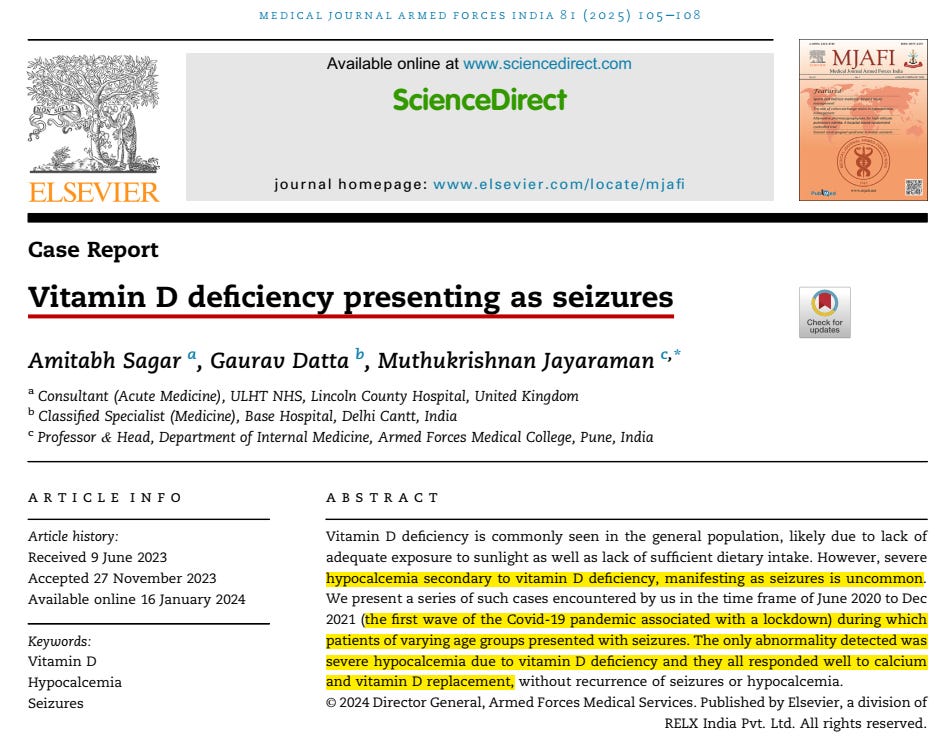
Notes about this particular article—see image with abstract/summary above, with the complete PDF article provided below:
Trousseau’s sign is a clinical indicator of low blood calcium (hypocalcemia) or high nerve and muscle sensitivity (neuromuscular excitability). It causes the hand and wrist to spasm into a flexed position when a blood pressure cuff is inflated above the systolic pressure for two to three minutes.
Chvostek Sign: How to test: Tap gently on the facial nerve, located right in front of the ear just below the zygomatic arch (over the masseter muscle). Positive result: A brief twitch or spasm of the facial muscles (such as the corner of the mouth or the side of the nose) on the side being tapped. Clinical note: It is less reliable because roughly 10–25% of healthy people can test positive, and some patients with true hypocalcemia may not show it.
Note the very impressive laboratory results reported in this article: the two tests that I highlighted are tests that clinicians should be using in the evaluation of these more severe cases, in addition to the usual serum calcium and 25ohD.
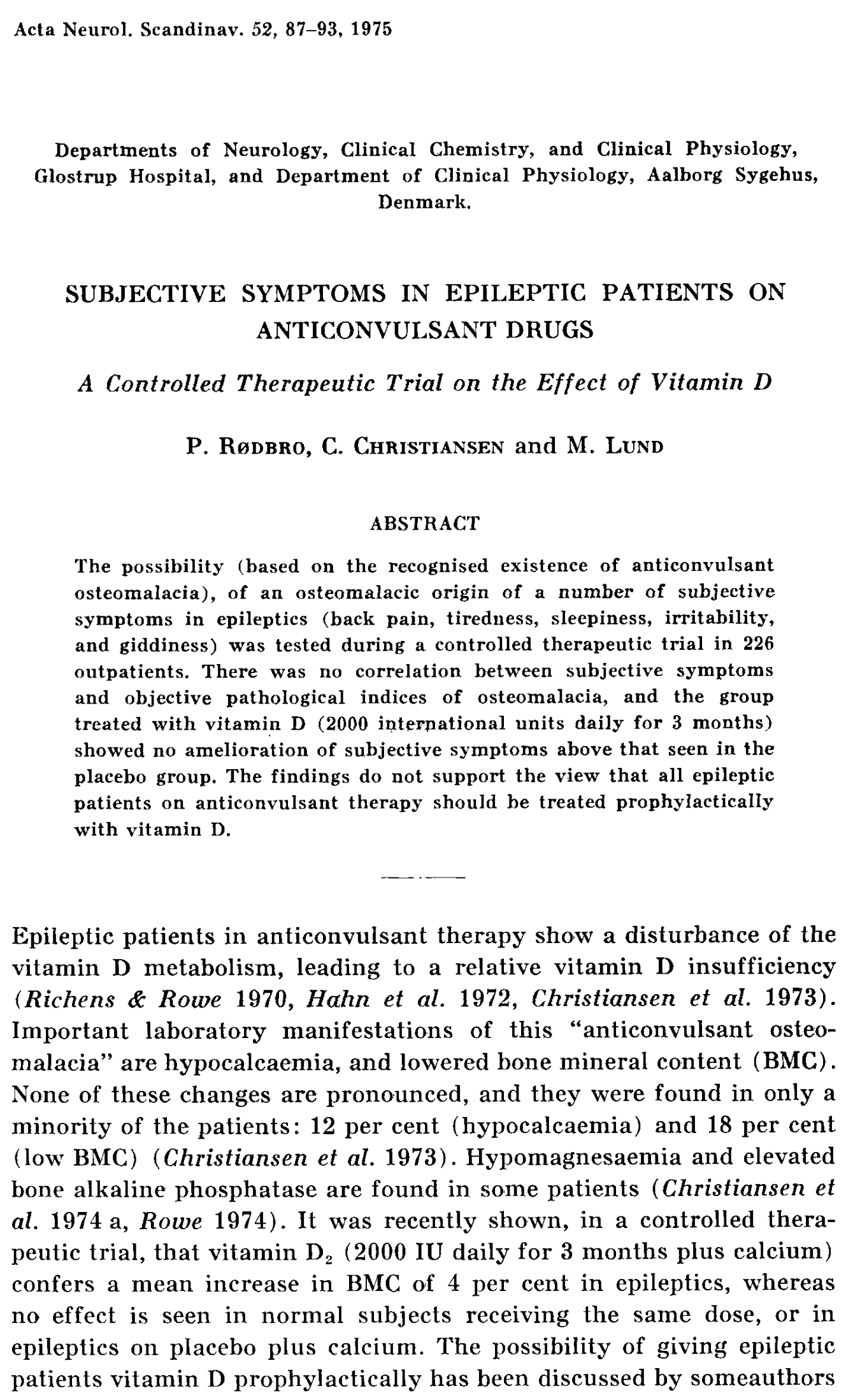
PART 1: Neuroinflammation, Chronic Seizures (Epilepsy), and the Medical Paradigm versus Nutrition and Human Physiology
Challenge of the day: If you are good a reading clinical research, then you should be able to determine the value of this research within less than 30 seconds.