

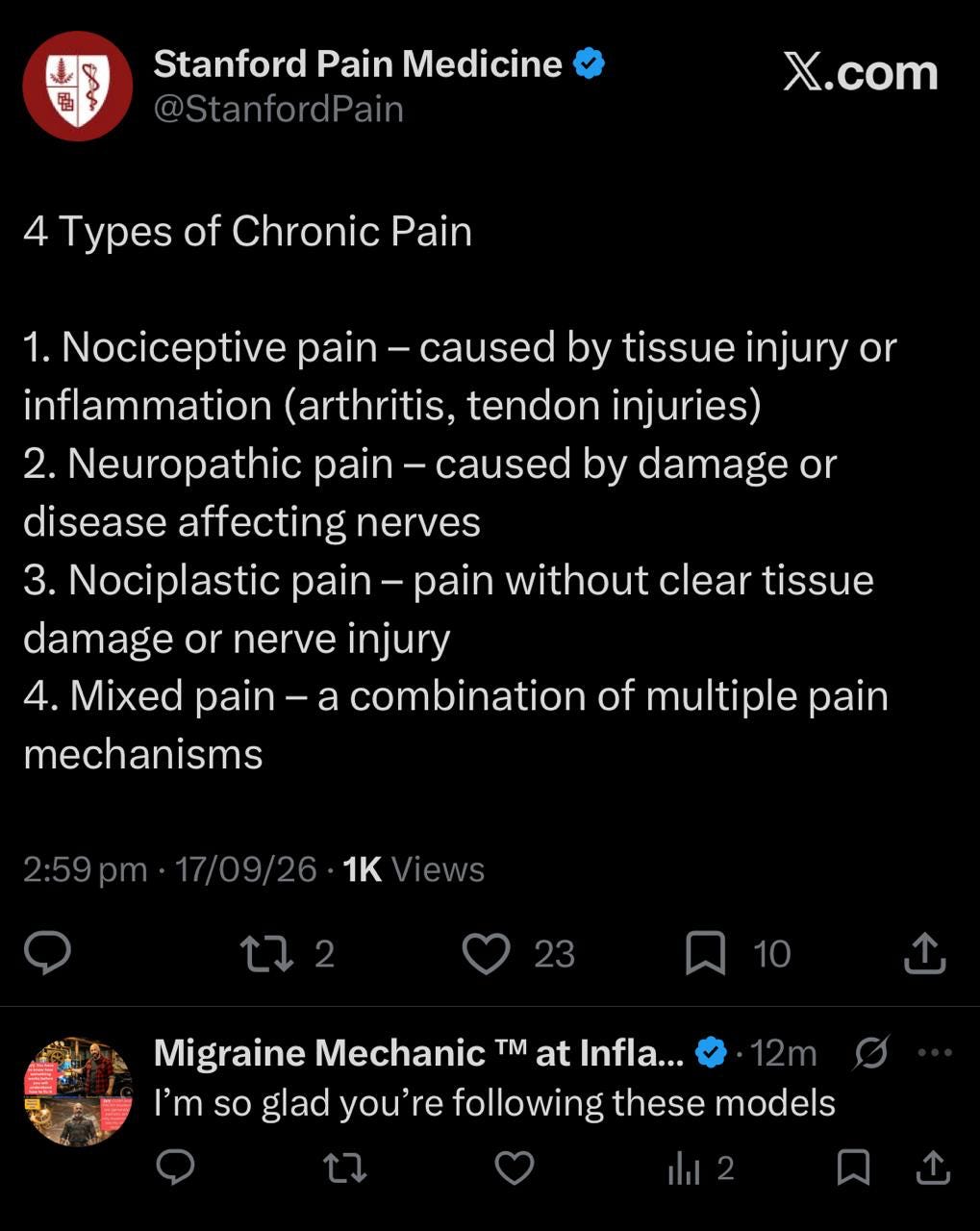
Stanford Medical School/Center just published a recent post under the title of “Stanford Pain Medicine“ describing “four types of chronic pain” as you can see in the image provided below, which includes my comment to them.
As you can imagine, I’m quite delighted that they still think this way because this proves that I was right when I said six years ago that the entire medical profession is hopelessly lost in their perception of chronic pain conditions and that’s why their treatments for chronic pain have a 97% failure rate, even by their own pro-medical guideline-endorsed standards.
If the medical model of “chronic pain” is wrong, then “targeted treatments” are only going to hit the wrong targets, and this explains the >95% failure rate of medical pain guidelines.—DrV
They keep falling into the same hole of bad modeling, logical errors, bad treatments and 30 years of therapeutic stagation, bad failure-guaranteeing guidelines, and perpetual nutritional ignorance.
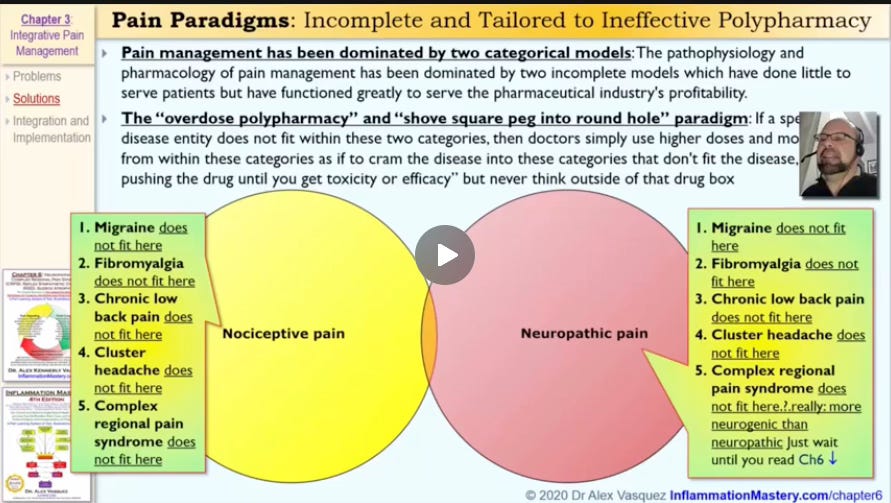
You can see in the screenshot below from my video review of “vitamin D deficiency in chronic pain” that I was already critiquing this outdated medical model 6 years ago, even when I myself still had CRPS (!!!) as I discussed recently.
You will have noticed in my video review of “the role of vitamin D deficiency in chronic pain” that I specifically attacked the medical model of chronic pain because of its emphasis on these two types of chronic pain—nociceptive and neuropathic—that they most commonly treat with their ineffective drugs. If the model is wrong, then “targeted treatments” are only going to hit the wrong targets.
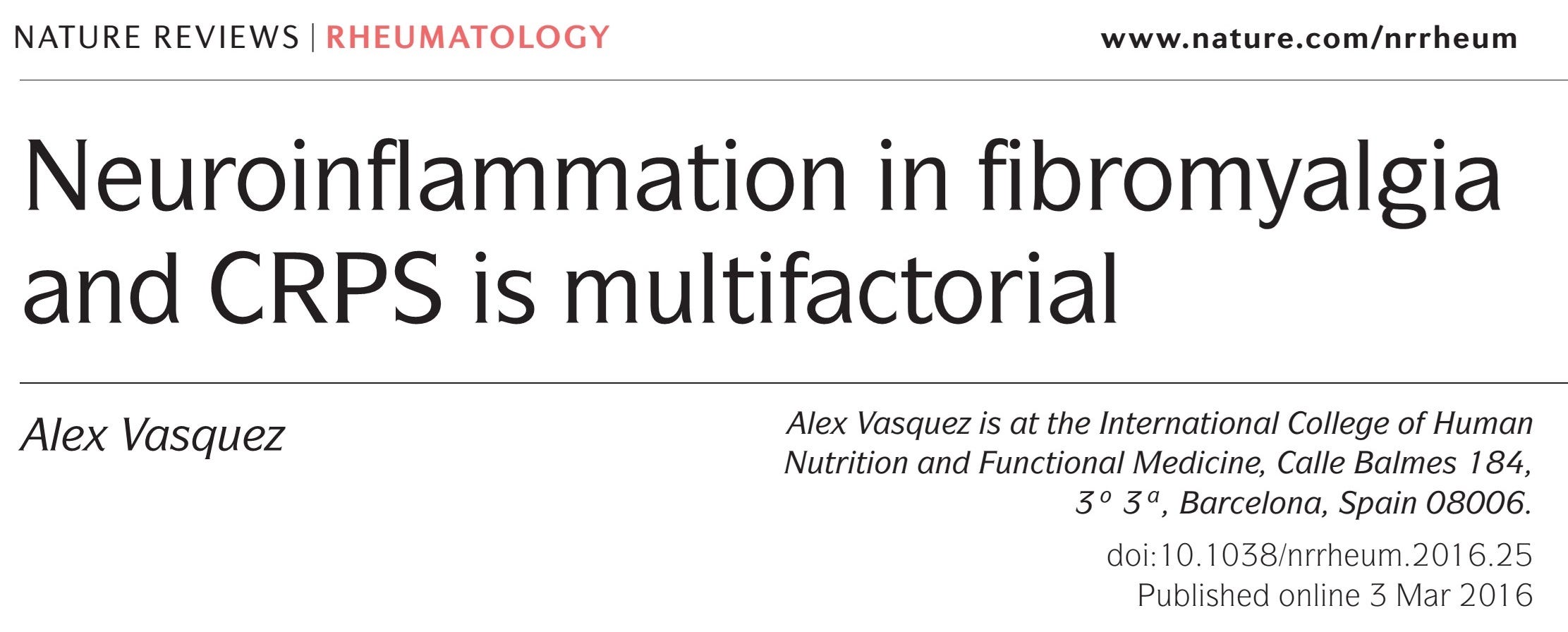
They feel very proud of themselves that they have now added a third condition which is called “nociplastic pain“ which is an extension of the absurd “neurogenic neuroinflammation” model published around 2016 which I addressed in my correspondence to the journal Nature Reviews Rheumatology after deciphering their physiology gaslighting titled—citations for those publications are provided here:
Littlejohn G. Neurogenic neuroinflammation in fibromyalgia and complex regional pain syndrome. Nat Rev Rheumatol. 2015 Nov;11(11):639-48
Vasquez A. Neuroinflammation in fibromyalgia and CRPS is multifactorial. Nat Rev Rheumatol. 2016 Apr;12(4):242
Ten years with sever RA I’d say mine isn’t on this list. It’s much worse during flare ups. Had my RA appointment today and I will be transitioning from 8 pills of methotrexate on Sundays to an injection and also she is adding Imuran once daily for the first two weeks then two a day. I’ll probably make a post about it later.