

Production note: This became a complex page to write because I added the consideration of evaluating vitamin D therapy within the established norms of ethical and professional behavior, rather than simply looking at it out of context, as if it were isolated from other clinical decisions. You will notice this addition toward the end of the page, and I will probably review/and refine that section over the next few days/weeks so you can revisit the page to get any updates, if you wish. Overall, even if it is a bit clumsy for its first publication, I am sure you will be able to understand the major points I am trying to communicate.
“Asking questions without proper context will (at best) produce “answers that are correct to the question” but—commonly—wrong to the larger context. Rather than “starting from zero” in the conversation on the clinical appropriateness of vitamin D therapy for whatever concern, I think we should use established criteria for our evaluation. By doing so, I think we can quickly see that the “vitamin D controversy” can be dismantled as vitamin D is an available intervention like any other: we can use it skillfully, with consideration of its major benefits and minor risks, respecting patient autonomy by providing fully informed consent about this powerful treatment option. Ignoring vitamin D when it provides a wide range of benefits at little cost, little risk, and widespread availability and affordability is unethical.”
Should doctors and patients use vitamin D in the treatment of Autoimmune Diseases such as Multiple Sclerosis (MS), how much, and how and why?
2026 News: I recently commented on the new study published in JAMA using vitamin D against multiple sclerosis (MS), and I also provided the full text of the article along with my critique. Despite the obvious fact that their study was fraudulently designed and conducted in order to attempt to show that vitamin D was ineffective, the power of vitamin D overpowered their malevolence and provided important clinical benefits.
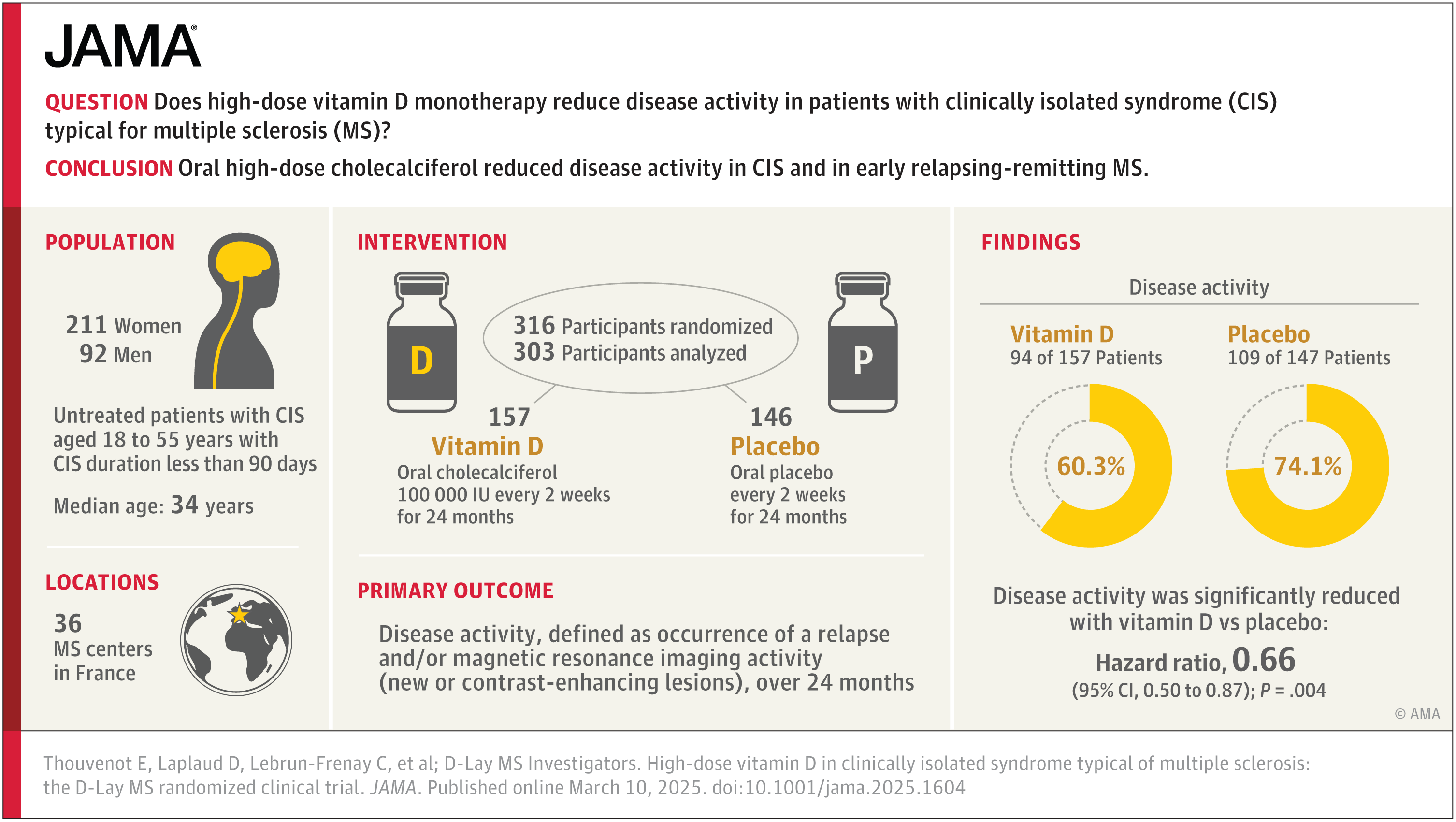
While the study was designed to fail via underdosing, the results nonetheless provided clear evidence of major clinical benefits. However, because the authors mislabeled the treatment as “high-dose”, failed to test for optimal 25ohD levels, and generally failed to show clinical and intellectual competence in their task, they left their audience without clear answers to the most important questions.
Readers will have noticed that in my recent review of the “Coimbra high-dose vitamin D protocol”, those authors make a distinction between MS vs other types of autoimmunity because they have found that MS patients have more metabolic defects in vitamin D handling and therefore require higher doses compared to other autoimmune diseases such as vitiligo and psoriasis. I agree with their dosage distinction while also acknowledging overlap among these conditions. To see my protocols for psoriasis and rheumatoid arthritis, see Inflammation Mastery 4th Edition:

Here, I will ask and answer the questions that should have been addressed in this recent publication by the American Medical Association if they had been a competent organization that actually wanted to advance patient care and science instead of pushing drugs and publishing negative and lackluster pseudostudies against nutrition.
I will perform this exercise twice for all questions and answers.
The first time, I will present the questions with short Socratic-type replies and resources for more details.
The second time, I will present the same questions with more complete and direct answers.
I will provide reasonable and science-based replies to each of the questions that I answer, but I also have to state that “this is not personalized medical advice for any anonymous person on the world wide web” and that this type of treatment (higher-dose vitamin D) for this type of illness (anything serious, including all of the systemic autoimmune diseases) should be personally supervised and customized by a licensed professional knowledgeable about 1) clinical/functional nutrition, 2) pathology, and 3) pharmacotherapies.
Part1: Questions with short Socratic-type replies and resources for more detail:
1. Should doctors and patients use vitamin D in the treatment of autoimmunity such as multiple sclerosis (MS)?
Generally speaking, YES—Vitamin D supplementation should be “standard of care” for MS patients and nearly everyone else, as well.
2. How much vitamin D should be used in the context of MS?
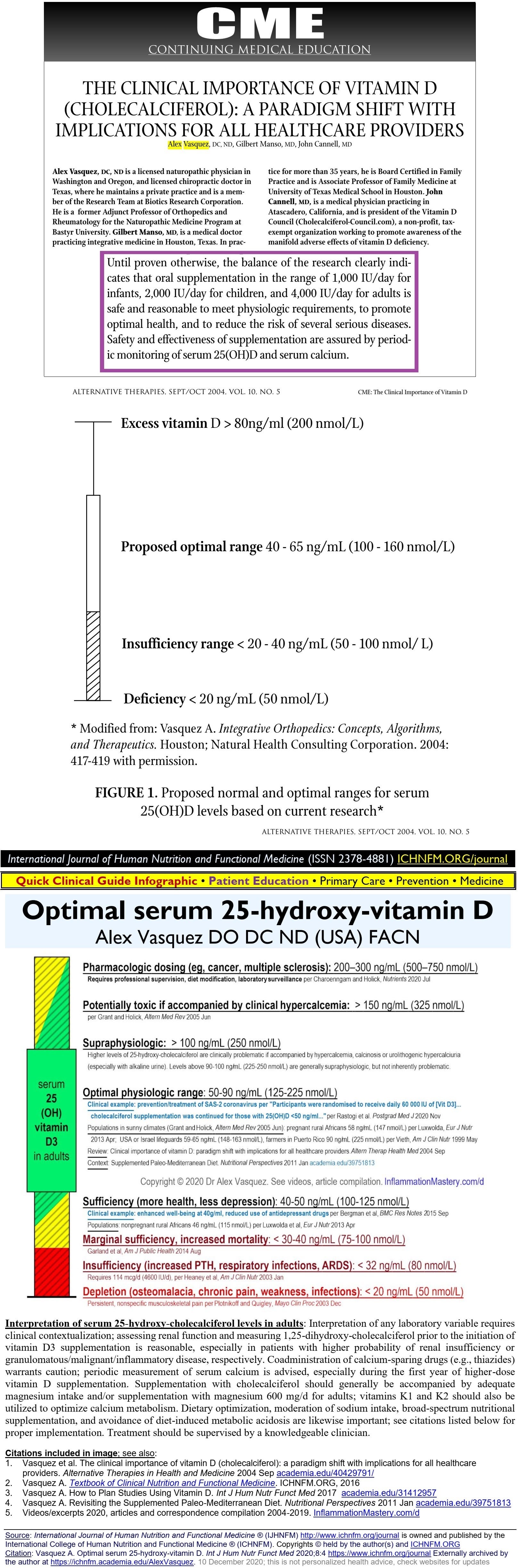
Since the benefits appear to be dose-responsive, achieving the higher levels of 25ohD within the safe and optimal range appears to be the best strategy. See my previous infographics on what I have considered the “optimal range” first in 2004 and revised in 2020—I have provided my infographics below as 1) JPEG image and 2) PDF, both of which can be downloaded:

2004 optimal range: progressive and yet slightly conservative for its time
2020 optimal range: more reasonable, but also a bit more risky; requires more clinician monitoring, lab tests, patient selection, etc.
3. How should vitamin D be used in the context of MS?
Dosage has to be customized (eg, per disease activity, age, comorbidities, drugs, kidney and liver function, etc) to achieve the higher levels of 25ohD within the safe and optimal range. Highly skilled and experienced clinicians with logistical support (eg, full-time staff, prescriptive authority, perhaps admitting privileges) might choose supraphysiologic dosing.
4. Why should vitamin D be used in the context of MS?
Vitamin D should be used in the context of MS for reasons that I have detailed previously, specifically in these previous videos/articles:
Antiviral: See the linked video plus additional details that I provide below.
Antibacterial/antidysbiotic: See the linked video plus additional details that I provide below.
Gut-healing: See the linked video plus additional details that I provide below.
MICROBIOME DYSBIOSIS (10) Gut Dysbiosis Prototypes and Solutions, part1, part2, part3, part4, part5
also available here at
Antiinflammatory/Immunomodulatory: See the linked video plus additional details that I provide below.


I will provide reasonable and science-based replies to each of the questions that I answer, but I also have to state that “this is not medical advice” and that this type of treatment for this type of illness should be personally supervised and customized by a licensed professional knowledgeable about 1) clinical/functional nutrition, 2) pathology, and 3) pharmacotherapies.
Part2: Questions with more complete and direct answers:
Asking questions without proper context will (at best) produce “answers that are correct to the question” but—commonly—wrong to the larger context. Rather than “starting from zero” in the conversation on the clinical appropriateness of vitamin D therapy for whatever concern, I think we should use established criteria for our evaluation. By doing so, I think we can quickly see that the “vitamin D controversy” can be dismantled as vitamin D is an available intervention like any other: we can use it skillfully, with consideration of its major benefits and minor risks, respecting patient autonomy by providing fully informed consent about this powerful treatment option. Ignoring vitamin D when it provides a wide range of benefits at little cost, little risk, and widespread availability and affordability is unethical.
Prequestion #0. The question(s) that should be asked before we attempt to address any of these treatment-specific questions are: 1) “What are the criteria by which we as doctors make clinical decisions?” and 2) “Based on those established criteria, how do we see vitamin D in this context, ie, how does vitamin D ‘fit’ into these pre-established criteria?”
0.1) “What are the criteria by which we as doctors make clinical decisions?”
The professional standard for most of the “profession of medicine” and what most doctors should have learned in whatever school they attended (eg, chiropractic, naturopathic, osteopathic, allopathic) can be described shortly as “risk-to-benefit ratio” which is an abbreviation of the longer and more complete ethical pillars of medicine, the four major pillars of which are: 1) autonomy, 2) beneficence, 3) nonmaleficence, 4) distributive justice. You can see my previous discussion of these 4 pillars of medical ethics from 2021 when doctors internationally were being forced to ignore these pillars of professionalism in favor of pushing the globalist agenda. Assuming that we start by respecting the patient’s autonomy, providing them enough information which they can make their own decisions (ie, informed consent) and that we are not forcing or coercing the patient to take whatever treatment is preferred by or reimbursed for the doctor (ie, principle of autonomy), and assuming that we are not withholding safe and effective treatments from poor people while offering better treatments to monied patients (ie, distributive justice), then the final major decision boils down to risk of harm vs probability of benefit, aka the “risk-to-benefit ratio” which is an estimate on how likely the patient is to be harmed versus helped by the treatment.

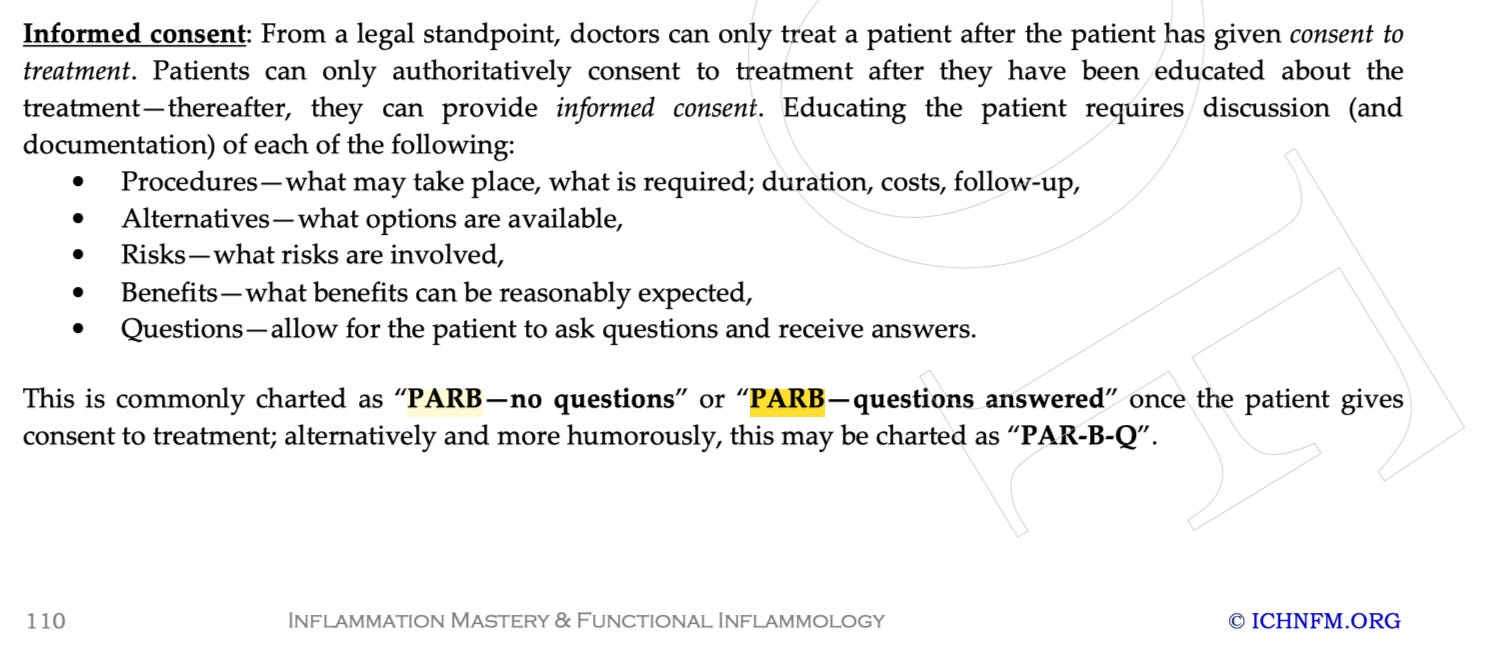
I will add another layer of detail here, courtesy of the 4 years that I spent in chiropractic college. At some point, I will write a short series of articles describing and distinguishing my chiropractic education (1992-1996) from my naturopathic medical education (1996-1999) from my osteopathic medical education (2006-2010) but this following example is of very high importance within that line of thought. In medical school, our training in Patient Management and Professional Ethics was virtually nonexistent just like any training in Radiography/Radiology, Laboratory Interpretation, Nutrition or Counseling—all of which were included as dedicated and named courses in chiropractic and naturopathic education, which means that sometimes I got a double-dose of these topics as I necessarily had to duplicate some of the coursework in various doctorate programs (sometimes with good reason). In our chiropractic college, we received extensive training in Ethics and Patient Management; this training went beyond superficial mention of “ethical behavior” and “informed consent” to include a detailed and specific structure of informed consent that would be the envy of any medical school if indeed medical education still had any pretense of creating competent clinicians instead of hospital slaves and prescription-writing drones. In our chiropractic college, we learned (in the classroom) and were forced to use (in the clinics)—not simply the concept of informed consent—a specific structure that we had to actually physically write by hand into our chart notes at every visit with every patient. Our structure for converting the vague concept of “informed consent” into something real, tangible, physical and meaningful was PARB—for each encounter with each patient, we were expected to advise verbally and document physically in the chart the actual living components of informed consent:
Procedures—what we actually did or were proposing to do
Alternatives—Patients have to be informed of their options; “informed consent” is meaningless unless the patient is informed of options.
The typical “informed consent” that gets played out in medical offices is isolated information about the drug, vaccine or surgery that the doctor is proposing to implement and sell. Any thoughtful baboon could see that this is hardly any legitimate form of “patient education” but is rather simply a sales pitch. If a doctor only “educates” the patient about the doctor’s favorite for-profit drug, vaccine or surgery, then the patient is simply receiving an advertisement and infomercial; unfortunately this is the state of “medical ethics” practiced by the “medical profession” these days, if they even reach this languid level of performance. The vast majority of medical doctors pushing vaccines don’t even give proper education about the risks and ingredients of vaccines and thereby the fail to reach any minimal basic level of professionalism and ethical behavior. Beyond this minimal performance would be education about options, but most medical doctors have no idea about options to drugs, vaccines, and surgery, so they have nothing to offer except hubris, bluster, intimidation and the rhetoric that “vaccines are safe and effective” when the research clearly shows that—generally—they are neither. Vaccines are a major profit center in Family Medicine and Pediatrics, commonly generating hundreds of dollars per visit, and—with each visit only lasting a few minutes—this equates to thousands of dollars per hour for a typical vaccine-dependent vaccine dispensary in the United States. Again, most medical doctors never provide proper informed consent specific to vaccines, let alone any competing options such as antiviral nutrition in general or vitamin D in particular, which has shown potent antiviral benefits against a wide range of viruses that cause clinical disease in humans. As I have said recently: “Medical propaganda isn’t simply about overstating the benefits and understating the risks of drugs, but also relentlessly attacking Nutrition and other nondrug/nonsurgery options so that patients and politicians will be scared into drug dependency. This consistent undercutting of the validity of nutrition interventions (when such exists) results directly in millions of deaths per year and losses and misappropriations of billions of dollars/euros throughout the United States, Canada, Australia, the rest of the English-speaking world and Europe.”
Risks—A reasonable estimation of probability of harm; precise risk evaluation is impossible beyond ballpark estimates such as “high, medium, low” given patient nuances, physician skill/error, and chaos in the universe, including unpredictable adverse effects of treatments due to anatomical variation and idiosyncratic reactions to drugs such as drug allergy, interstitial nephritis and acute kidney injury, Steven Johnson Syndrome (SJS) and Toxic Epidermal Necrolysis (TEN).
Benefits—A reasonable estimation of expectation of benefit; precise risk evaluation is impossible beyond ballpark estimates such as “high, medium, low” probabilities based on patient compliance, treatment efficacy, physician skill, and the overall treatment plan.
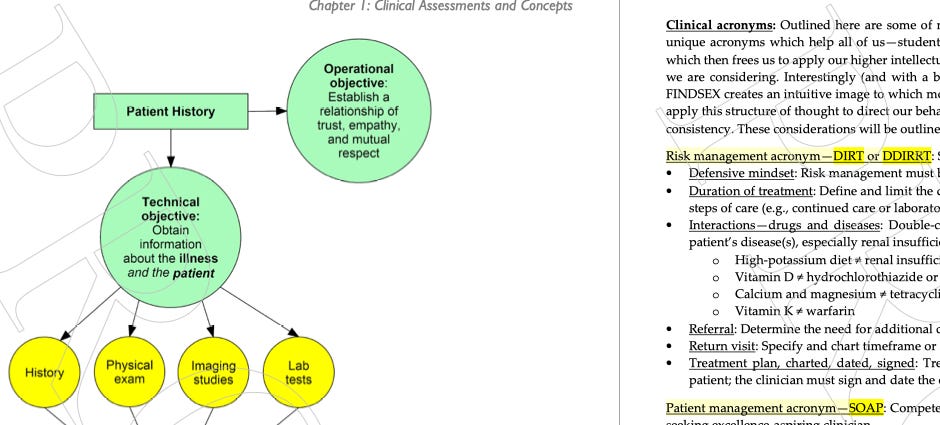
Readers of Inflammation Mastery 4th Edition will have already seen this conversation represented redundantly in Chapter 1 which covers Patient Management, Informed Consent, and “PARB” as described above, but with more examples and illustrations.


0.2) “Based on those established criteria, how do we see vitamin D in this context, ie, how does vitamin D ‘fit’ into these pre-established criteria?”
Notice that all of the major and established components of medical ethics—autonomy, beneficence, nonmalefecence, justice—are sufficiently included in the “PARB” described above, because the act of informing the patient about Procedures, Alternatives, Risks and Benefits already includes the major ethical considerations but has moved them from conceptual to conversational. Distributive justice is typically not considered in daily clinical practice because it is a public health, distribution, government/organization-level concern; it would only be considered in severely resource-limited settings.
Let’s look at vitamin D from the perspective of all of these well-established ethical and practice-guiding templates:
Legitimately respecting patient AUTONOMY requires first EDUCATING THE PATIENT about PARB—the PROCEDURE, ALTERNATIVES, RISKS AND BENEFITS:
Vitamin D—Doctors can provide patients with fair and balanced information about vitamin D: how to safely use it, that it is required for the human body, that risks exist but are minimal and can be managed with supervision and laboratory testing, and that the benefits are massive and commonly better than what can be achieved with synthetic drugs.
Nonmaleficence is a fundamental ethical principle, often defined as "do no harm" (primum non nocere), requiring individuals—particularly in healthcare and research—to refrain from providing ineffective treatments or acting with malice.
Vitamin D administration is very safe as I reviewed in my 2004 publication “the vitamin D paradigm shift”—Vasquez A, Manso G, Cannell J. The clinical importance of vitamin D (cholecalciferol): a paradigm shift with implications for all healthcare providers. Altern Ther Health Med. 2004 Sep-Oct;10(5):28-36; quiz 37, 94. PMID: 15478784.
Vitamin D is active treatment with clinically measurable benefits in a wide range of health problems and diseases, including “pandemic infections due to laboratory-created viruses” and many types of chronic pain and many types of mood disorders such as depression and anxiety and many types of immune/inflammatory disorders especially by improving barrier function and immunomodulation.
Beneficence: Vitamin D is proven safe and effective for a wide range of health problems and diseases, including “pandemic infections due to laboratory-created viruses” and many types of chronic pain and many types of mood disorders such as depression and anxiety and many types of immune/inflammatory disorders especially by improving barrier function and immunomodulation.
Distributive justice, cost-effectiveness: Vitamin D is widely available and inexpensive.
Vitamin D easily meets all standards of ethical and professional responsibility when properly administered either as monotherapy or as part of a comprehensive treatment/preventive strategy.
1. Should doctors and patients use vitamin D in the treatment of multiple sclerosis (MS)?
Generally speaking, YES—Vitamin D supplementation should be “standard of care” for MS patients and nearly everyone else, as well.
The study that I reviewed in April2026 from JAMA was clearly underpowered and yet showed significant and clinically meaningful benefit despite the absurdly low dose. Clinicians need to “think like doctors” and appreciate the implications of cost, effectiveness, therapeutic index (etc) in order to clarify the proper clinical implementation.
First of all—the clinical benefits were clinically important:
LESS DISEASE ACTIVITY: Disease activity was observed in 94 patients (60.3%) in the vitamin D group and 109 patients (74.1%) in the placebo group (hazard ratio [HR], 0.66 [95% CI, 0.50-0.87]; P = .004),
DELAYED ONSET OF ILLNESS: median time to disease activity was longer in the vitamin D group (432 vs 224 days; log-rank P = .003).
FEWER LESIONS: All 3 secondary MRI outcomes reported significant differences favoring the vitamin D group vs the placebo group: MRI activity (89 patients [57.1%] vs 96 patients [65.3%]; HR, 0.71 [95% CI, 0.53-0.95]; P = .02), new lesions (72 patients [46.2%] vs 87 patients [59.2%]; HR, 0.61 [95% CI, 0.44-0.84]; P = .003), and contrast-enhancing lesions (29 patients [18.6%] vs 50 patients [34.0%]; HR, 0.47 [95% CI, 0.30-0.75]; P = .001).
As such, vitamin D can reasonably be considered a DMARD—disease-modifying antirheumatic drug—because it isn’t simply antiinflammatory (eg NSAID) but is actually changing the course of the illness.
Second—Those benefits contrasted with the low cost provide one of the best cost-effectiveness ratios in the history of medicine and pharmacology.
Third—Tertiary benefits include:
alleviation of pain
alleviation of depression and anxiety
reduced systemic inflammation
reduced risk of various types of infection
reduced risk of cardiovascular disease, dysmetabolism, obesity, cancer, weakness/frailty, fracture, sarcopenia, etc.
For video reviews, see the links in my earlier mention of vitamin D’s proven benefits in “pandemic infections due to laboratory-created viruses” and many types of chronic pain and many types of mood disorders such as depression and anxiety and many types of immune/inflammatory disorders especially by improving barrier function and immunomodulation.
Fourth—Lack of drug interactions with vitamin D.
Vitamin D is very safe generally and also specifically with regard to drug interactions. One of the few drug interactions is with hydrochlorothiazide because HCTZ is a calcium-sparing diuretic (causes calcium retention) and thus the combination of vitamin D with HCTZ can promote hypercalcemia—Many doctors have never seen this, and I (DrV) have only seen it on one occasion in clinical practice.
Fifth—Affordability and immediate international availability.
Vitamin D is widely available and inexpensive.
